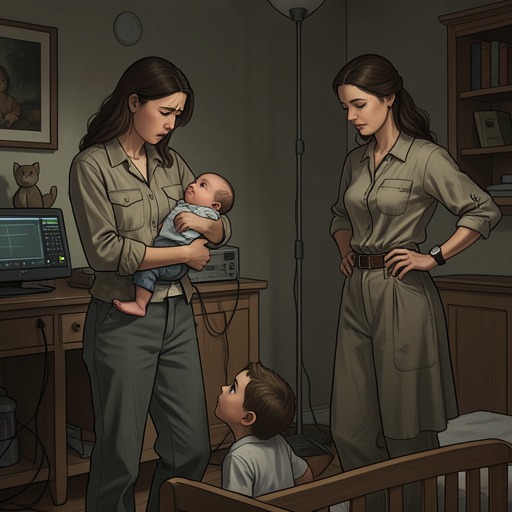
Tully Intervenes in Kate and Marah’s Relationship on Live TV
Firefly LaneTully Intervenes in Kate and Marah’s Relationship on Live TV is a turning point in Tully Hart and Kate Ryan’s friendship: an effort to help Kate reconnect with her daughter becomes a televised ambush that leaves Kate humiliated and ends the trust between the two women. Tully sees the show as a way to make a mother and daughter listen to one another; Kate experiences it as the public exposure of a private struggle, arranged without her consent and carried out in front of her family and a national audience.
Background and Intended Intervention
Tully’s plan grows out of Kate’s admission that, if she could change one thing in her life, she would get Marah to speak to her again. Tully recognizes that the proposed massages and drinks will not address the problem: Kate needs real help, and Tully believes she has found a way to reach her. She proposes a mother-daughter segment on her show, preferably live, reasoning that the absence of editing will make the encounter feel genuine. Because Marah wants to appear on television, Tully assumes she will participate and that the camera will keep her from making herself look bad. In Tully’s design, the show’s visibility is an instrument of honesty and reconciliation; she expects Kate to be able to express her love and Marah to hear it.
That plan also exposes its central flaw. Tully moves from recognizing Kate’s pain to deciding, on her behalf, how it should be addressed. The evidence of her hope is immediate: Kate’s face seems ten years younger when she asks whether the idea might work. But that hopeful response is not informed consent to the intervention that follows. Tully’s confidence in the format and her belief that she is helping do not prepare Kate for being presented as a problem before a television audience.
The Live Segment
On the broadcast, Tully introduces her friend as Kathleen Ryan. The formal introduction places Kate, who has stumbled beneath the stage lights, inside a public performance before she has fully understood what is happening. Dr. Tillman then speaks about controlling mothers who damage their children’s psyches, comparing children to flowers that need room to grow and arguing that rigid rules cannot keep them safe. Kate recognizes that the discussion is about her: her family is present, and national television is casting her as a bad mother.
Tully tells Kate that she needs help, says that Johnny begged her to intervene, and claims that Marah wants to confront her but is afraid. Marah then walks onto the stage smiling at the audience. The arrangement makes Kate’s private family conflict into the segment’s spectacle: the host, expert, daughter, and audience are already in place, while Kate has been brought into the confrontation without knowing its terms. She begins to cry, and her vulnerability intensifies her anger rather than softening the scene. When Dr. Tillman presses the case that she is crushing her daughter’s spirit, Kate refuses the role the program has assigned her.
Confrontation and Rupture
Kate turns on both the intervention and its organizer. She challenges Tully’s claim to be helping her, then tells the audience that Tully knows nothing about love, family, or the hard choices women face. Her accusation strikes directly at the gap between Tully’s public authority as a television host and Kate’s judgment of her private life. Tully warns her that they are live, but that reminder only sharpens the conflict: the broadcast’s continued visibility is part of what Kate is protesting, not a reason to comply.
Kate removes her microphone and power pack and throws them to the floor. She storms offstage, taking Marah by the arm. The gesture ends the segment on her terms, but it cannot undo the exposure or the humiliation. Backstage, Johnny holds her and apologizes, while Kate’s mother says that Tully must have thought she was helping. Yet the family’s attempts to make sense of Tully’s intention do not restore the trust the broadcast has broken.
Aftermath and Significance
Johnny confronts Tully, telling her that Kate trusted her and that the family trusted her too. Tully insists she was trying to help, explaining that Johnny had said Kate was falling apart and that Dr. Tillman had encouraged drastic measures. Her account makes clear that the intervention came from concern and advice, but also that she acted on interpretations and assurances instead of ensuring that Kate understood and agreed to the plan. A beneficial intention does not erase the difference between supporting a friend and taking control of her most intimate relationships.
When Tully asks whether the friendship can really be over after thirty years, Johnny answers with a cold certainty that it ended that day. The scene’s consequence reaches beyond a failed television segment: a lifelong bond is broken at precisely the moment Tully believes she is proving her loyalty. The episode also echoes the friends’ earlier history of painful disclosure and care. When Tully cried after disclosing rape, Kate held her; when Tully told Kate that her grandmother had died, Kate again let her grieve in silence and in her arms. In those moments, Kate’s response began with presence rather than a plan for public repair. The live intervention reverses that pattern: Tully tries to turn care into action, but fails to make room for Kate’s choice. Its decisive wound is therefore not simply that the effort goes wrong; it is that help, imposed before it is accepted, makes trust itself the casualty.